93 Ricky Pearsall75Grade
If not for injuries, the San Francisco 49ers might have found their No. 1 wide receiver in Ricky Pearsall. He missed seven games last season because of a PCL injury, which will need surgery and likely keep him from playing in 2026. That dampens his grade. Otherwise, Pearsall is a great fit for their scheme and quarterback room. He's a technical, detailed route-runner who separates from multiple alignments. He's also great at attacking the corner's leverage and breaking away at the top of his routes. His football IQ is evident in his ability to diagnose post-snap coverages quickly and stay on the same page with the quarterback. His hands are strong and reliable, tracking the football and snatching it out of the air.
92 Gunnar Helm75Grade
The Titans didn't bring back Okonkwo because Gunnar Helm showed them that he could handle being an every-down player. Over the last month of the season, he was on the field on more blocking downs, took on the "Y" role for their offense, and improved as a blocker. The former fourth-round pick quickly developed a connection with Cam Ward, and they were meant to play together. Helm catches everything around him, and Ward knows how to get it there, but he's also a savvy route-runner with manipulation tactics to get open. The growth he showed as a rookie was impressive, and he's poised to break out as a second-year player.
91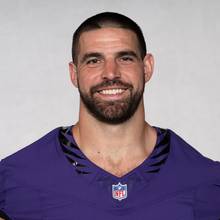 Mark Andrews75Grade
It was a tumultuous season for Mark Andrews, who, among other problems with the 2025 Ravens, didn't perform up to standards. An injury to Lamar Jackson hurt the offense in more ways than one, but the passing attack wasn't the same. On top of that, Andrews had more trouble capitalizing on his targets than in the past. He had a lower yards per reception than at any point in his career last year, according to NFLPro, and his receiving EPA was -9.7, also the lowest of his career. He's still an excellent space finder and one of the best at exploiting zone coverages, but his usage varied with three different quarterbacks at the helm, and his impact as a receiver showed that.
90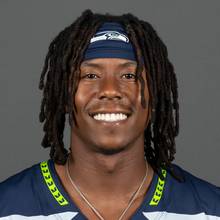 Rashid Shaheed75Grade
Rashid Shaheed is well known as a game-changing return specialist. His open-field speed will flip field positions on offense and special teams. Shaheed spent part of the season with the New Orleans Saints before being traded to the Seahawks. He is an electric playmaker with versatility in usage, from jet sweeps and reverses to lining up as the running back in the formation. Shaheed sets up his routes with the threat of his game-breaking speed. He is a multi-tooled weapon and impact player for the Seahawks offense and special teams.
89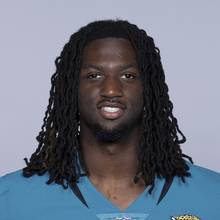 Brian Thomas Jr.75Grade
2025 was a down season after a breakout rookie campaign for Brian Thomas Jr. The Jaguars' explosive wide receiver battled ankle and wrist injuries, forcing his numbers to decline. Along with the emergence of Parker Washington and the trade for Jakobi Meyers. Thomas Jr. had success creating separation last season, but the confidence in catching the football was clearly lacking, leading to easy drops. Thomas Jr. is a great physical talent who has reached over 1,000 yards in a season in his short career. Heading into this season healthy, he must bounce back and take the role of WR1 for the Jaguars.
88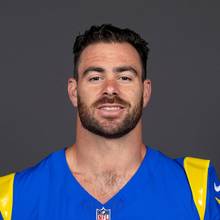 Tyler Higbee76Grade
Being a part of the Rams' tight end room has to be a ton of fun, and Tyler Higbee has been there for a while, just doing his thing. While he's spent time each of the last two seasons nursing injuries, he's an effective part of the league-leading users of the 13-personnel game plan when he's on the field. A multi-faceted blocker who does his best work getting to the second level to open lanes, Higbee moves from receiver to in-line presence throughout a game. He's a smart receiver who identifies space to work with and knows how to get there with savvy routes and good hands. They brought him back into the fold for 2026 for good reason; he's still got it.
87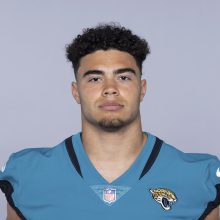 Brenton Strange76Grade
Adding explosiveness to an offense at the tight end position isn't an easy thing to find, but that's just what Brenton Strange brings to the field. He's a high-effort player in all areas and runs his routes with quick acceleration and an attacking mentality. The former second-round pick for the Jags is a smart player after the catch who can make players miss with underrated athleticism. His speed allows him to stretch the field and be a serious threat to Trevor Lawrence, where most tight ends can't. Strange brings it as a blocker, and while he can be hit-or-miss due to his aggression, he's a functional addition to the run game. He came back from injury and looked like his old self, and the Jaguars will be counting on him taking another step this season.
86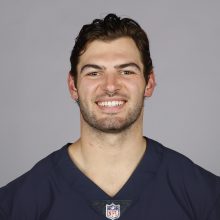 Cole Kmet76Grade
The willingness to step aside and become a "lesser" part of the Bears' passing attack shows you part of what makes Cole Kmet. He's willing to do whatever is asked of him, including whatever crazy blocking assignment Ben Johnson has concocted for him. While there's some inconsistency with his ball skills away from the body and through contact, Kmet remains a good receiving option with the physical yards-after-catch aspect he's always brought to the field. He gives the offense blocking flexibility and real viability as a pass protector, allowing him to be used in a variety of ways. On top of it all, he's the Bears' emergency quarterback. Even after drafting yet another tight end, Kmet remains a steady part of the Bears' offense going forward.
85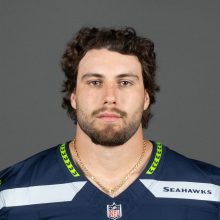 AJ Barner76Grade
A breakout second-year performance from AJ Barner helped cement him as the Seahawks' primary tight end and one of the rising talents at the position in the NFL. He isn't the most dynamic route-runner, but he plays with good timing and spacing, selling routes in sync with the scheme. He's comfortable catching the ball away from his body and flashes utility after the catch. But Barner is a complete tight end. He's a good multiple-blocker in the run and passing game, which helped spring Seattle's run game into action with multiple big runs on their way to a Super Bowl. They felt comfortable running to Barner's side time and time again, and he earned their trust. Barner is one of the best young tight ends in the NFL and could be on his way even higher this coming season.
84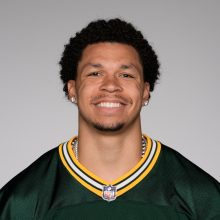 Christian Watson76Grade
Christian Watson began the season recovering from a Torn ACL. He made his season debut in week eight against the Pittsburgh Steelers, and his impact was instant for the Packers' offense. Watson has established himself as one of the league's best deep threat receivers. He possesses a prototypical X-receiver frame with breakaway top-end speed. Injuries have been a consistent part of Watson's story. If he can overcome the injury history, the Packers' offense will have its WR1.
83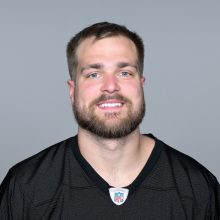 Pat Freiermuth76Grade
The Steelers offense was a tough watch last season, and several players weren't put in the best positions to succeed. Pat Freiermuth was seriously underutilized on a team lacking legit pass-catching talent. He's a good route-runner who can attack the middle of the field and adjusts to the football well in the air. A savvy runner after the catch, Freiermuth sees space pre- and post-snap to take advantage of regularly. He was +100 yards after the catch over expected in 2025, according to NFLPro, and has been positive in that category throughout his career. Finding ways to get the ball in Freiermuth's hands is usually a good thing, and after some changes to the staff going into 2026, there's room for him to have a bounce-back season.
82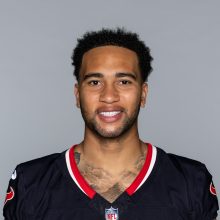 CJ Stroud76Grade
C.J. Stroud has not lived up to the hype after a stellar rookie season a few years ago. The Texans' offensive line woes are a big part of that, but he has to make better decisions consistently. Stroud's strengths as a passer are precision, accuracy, touch, timing, and anticipation. If protected, he can be a surgical passer who can take advantage of matchups all over the field. Stroud has struggled to deal with and counter defensive pressure packages. The pressure appears to speed up his process and force bad decisions, leading to turnover-worthy plays. Stroud possesses the talent to be a top-12 quarterback and a franchise quarterback, but he must return to his efficient style of play.
81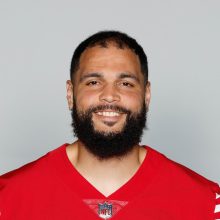 Mike Evans76Grade
Mike Evans is an established, consistent playmaker who brings reliability to the offensive passing game. Due to a hamstring, concussion, and a fractured collarbone, he played in eight of 17 games. When healthy, Evans wins one-on-one matches with veteran-level savvy and route-running. He lost a step athletically, but his football IQ and nuance at the position overcome those shortcomings. Evans remains a big target who can "moss" defenders at the catch point. He doesn't offer much in the yards after catch department. In the red zone, he continues to be a reliable offense-friendly target.
80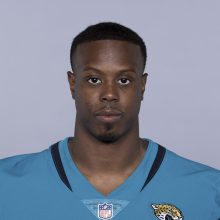 Travis Etienne Jr.76Grade
Travis Etienne is a consistently productive running back. In three of his four seasons, he's rushed for over 1,000 yards, including last season. The former Jaguar starter looked dynamic and energized after battling shoulder and hamstring injuries in 2024. Etienne is a patient runner with quick footwork that takes his body wherever his eyes land. He is a dual threat out of the backfield as both a runner and a receiver. He's a dangerous player in space because of his top-end speed, making him a home run threat at any time from anywhere by turning plays into a footrace.
79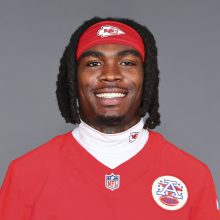 Rashee Rice77Grade
When healthy and on the field, Rashee Rice is an impactful receiver for the Kansas Chiefs' offense. He operates as the power slot. The strengths of his game are football IQ post-snap to find open voids in the coverage and creating after the catch. Rice plays with good patience as a runner and body control through contact. He's displayed dependable strong hands throughout his career to pluck the ball out of the air. Rice is a YAC-dependent pass catcher. Being schemed open into space to mitigate his route running concerns. His routes lack explosiveness or sharpness. Also, he's not an explosive vertical threat, which places more onus on play calling and usage. He's a good starter at receiver but not a needle-moving WR1.
78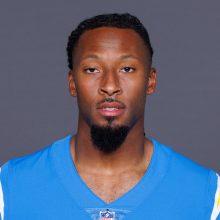 Quentin Johnston77Grade
Quentin Johnston deserves more credit for the growth since his rookie season. He led the Chargers in yards per reception and receiving touchdowns this past season. Johnston is a big, fast wide receiver with a route tree that has numerous branches. He gets open in the short, intermediate, and deep areas of the field. Johnston uses the threat of his speed to force them into off-coverage pre-snap. He earned Justin Herbert's trust last season, especially when they wanted an explosive play. There are a few concentration drops, but he's improved yearly.
77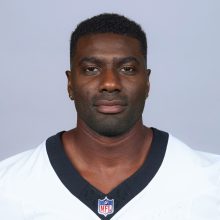 Juwan Johnson77Grade
After handling the most targets in his career, Juwan Johnson found that playing in Kellen Moore's offense is going to be great for his production. The sixth-year tight end hit career highs in receiving yards (889) and receptions (77) and showed why he's one of the most nuanced receivers at the position. Johnson is an excellent route-runner who plays with great timing, nuance, and acceleration to maximize yards after the catch. He's a frustrating player due to his blocking care factor and drops for a player with his ball skills, but when he's firing on all cylinders, Johnson is incredibly tough to stop.
76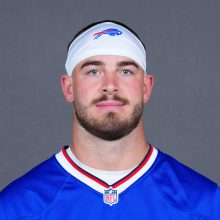 Dalton Kincaid77Grade
Even though he battled injuries throughout last season, when Dalton Kincaid was on the field, he was a difference-maker. Being a chain mover as a tight end with his route-running ability is a huge plus, and he accessed open areas of the field with his eyes and football IQ as much as his raw talent. Kincaid was stronger through contact at the catch point, though physicality through the route impacts him, and he is still a three-level threat in the passing game. According to NFLPro, "Dalton Kincaid led all tight ends in yards per target (11.7) this season (min. 20 targets), racking up 15 receptions, 320 yards, and three touchdowns on downfield targets." With the addition of DJ Moore occupying defenders, a healthy Dalton Kincaid could be in for an even better 2026.
75 Aaron Rodgers77Grade
Aaron Rodgers is well past his prime, but he is still a good starting quarterback at his age. He threw for 3,322 yards, 24 touchdowns, and seven interceptions. Rodgers is more than capable of delivering accurate downfield passes. He has flashes of the "wow" prime Rodgers throws with his snappy release and quick trigger. Rodgers is entering his final year before retirement. With the right weapons and protection, the Steelers' starter can help them win the division again and become a postseason threat.
74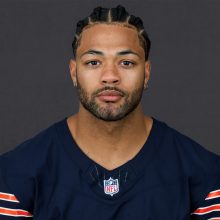 Rome Odunze77Grade
Rome Odunze's sophomore regular season was cut short due to a stress fracture in his right foot. He missed the final five games of the season before returning in the postseason. In his 12 starts, he was a consistent target for Caleb Williams. Odunze runs an efficient and well-rounded route tree. He separates well for a receiver of his height and weight. He displays a good level of football IQ, settling into the voids against zone coverages and playing every receiver position for the Bears' offense. His foot injury from last season appears to be a lingering issue that Odunze described as his "New Normal". It's a waiting game to see which version of Odunze we will see going forward.
73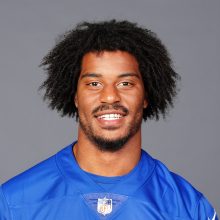 Isaiah Likely77Grade
While many know Isaiah Likely for pass-catching ability, he's one of the better blockers on the move at the tight end position. He's looking to punish defenders as a lead blocker in space, times up his power well, and extends to create lanes. He won't cave in the sides of the defense as an in-line blocker, but the tenacity is fun to watch. Likely is a complete receiver who sells routes with speed, doesn't drop the ball, and brings tons of added value when the play breaks down. If he had better awareness after the catch with the football, there wouldn't be as many fumbles or a called-back touchdown from last season. There's still more potential for Likely as a pass catcher, and hopefully that will be unlocked in New York.
72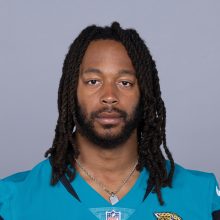 Jakobi Meyers77Grade
Jakobi Meyers is an example that the 40-yard dash is not an indicator of creating separation in the NFL. He is a natural separator and route-runner with a high football IQ. Meyers' short area quickness at the line of scrimmage manipulates corners who want to be handsy and physical. He is fantastic at using his savvy and craftiness to quickly create space in the short and intermediate areas of the field. Meyers is not an elite wide receiver, but he showed his worth as a needle mover for the Jaguars offense.
71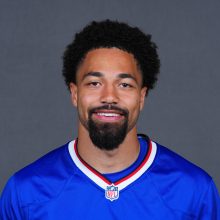 Khalil Shakir77Grade
Khalil Shakir was the security blanket and safety valve for the Buffalo Bills' passing offense. Whenever Josh Allen faced the blitz, he targeted Shakir the most on the team. He's a quick-footed route-runner and excels on short underneath route designs. Shakir is a fun playmaker in space, with his lateral agility and elusiveness, forcing missed tackles on the perimeter. He is not a traditional number-one wide receiver who plays and dominates in every alignment. Shakir is a valuable receiver with a high football IQ who keeps the chains moving.
70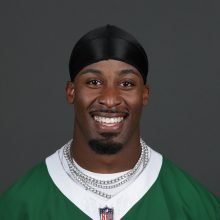 Breece Hall77Grade
2025 was Breece Hall's first 1,000 rushing season of his career. After tearing his ACL in 2022, he's bounced back and looks like his best football is ahead. Hall is great at patiently setting up his blocks and using that explosive burst through the lane to slash through the teeth of the defense. He's a difference-maker as a receiver out of the backfield in the passing game. The Jets aren't known as a diamond mine of offensive talent, but Hall is clearly a diamond in the rough.
69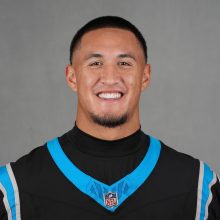 Tetairoa McMillan77Grade
The Carolina Panthers selected Tetairoa McMillan with the eighth pick in the draft, and he proved their decision to be correct. He caught 70 passes for 1,014 yards and seven touchdowns. His route-running carried over from college, as he was successful at separating against man and zone coverage. McMillan consistently creates space with his route IQ and stems to manipulate defenders. The drops were frustrating. Passes ricocheted off his hands, which created potential turnovers. McMillan had a good start to a career, but plenty of room to improve with a top-10 ceiling.
68 Alec Pierce77Grade
Alec Pierce is an ascending wide receiver who eclipsed 1,000 yards for the first time last season. Over the last two years, his yards have increased each season. Pierce has stamped himself as one of the league's best deep threat receivers, averaging over 21 yards per reception with 19 air yards per target. The Colts' big-play receiver has grown as a route-runner and separator since entering the draft in 2022. The arrow is pointing upward for Pierce, as long as his quarterback can maximize his explosive ability down the field.
67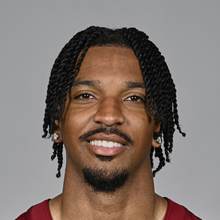 Jayden Daniels77Grade
Jayden Daniels' sophomore season was more of a struggle than his rookie year. The former Offensive Rookie of the Year for the Commanders battled injuries last season and was limited to seven games. Daniels dislocated his elbow and dealt with a knee sprain. When he was on the field, he had flashes of the star rookie from a year before. Daniels still throws an accurate ball with anticipation. His athleticism and pocket navigation haven't declined; he can still create something out of nothing under pressure. He needs to get back to being consistent with his reads from the pocket and not locking into a pre-snap decision. Daniels' return to full health will be pivotal to playing at a Pro Bowl level.
66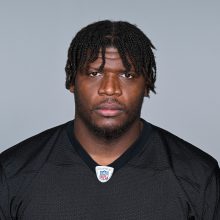 Darnell Washington78Grade
Darnell Washington is a unique athlete and player, even in the NFL, where they are everywhere. A self-proclaimed 311-pound tight end, and he definitely looks it (in a good way), who moves all over the formation and is a punishing blocker. His aggression can be taken advantage of, and he'll get top-heavy, but he's a weapon in the run game. For a slower player off the ball, if Washington gets the ball in space, he turns into the Juggernaut and can collect bodies on his way to yards after the catch. He still needs to work on his timing within both phases of the game, but a player with his unique talents will be coveted by the Steelers, and for good reason.
65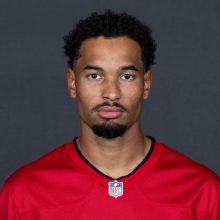 Emeka Egbuka78Grade
Emeka Egbuka's rookie season was an overall success. He started the season strong with big games against tough defenses, including the Seahawks and the Eagles. Egbuka suffered a low-grade hamstring injury but didn't miss extended time because he played through it. He excels as a route-runner and separation artist. Egbuka's route-running is "no-nonsense" and "intentional". What he lacks in elite speed and acceleration, he makes up for with savvy movement patterns, short-area quickness, and high football IQ. He led the Buccaneers in receiving despite being hindered by a hamstring for most of the season. He is ready to take over the WR1 position going forward.
64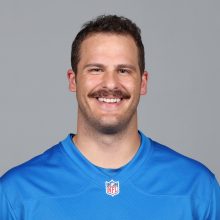 Sam LaPorta78Grade
Before suffering a herniated disc that required back surgery last season, Sam LaPorta was averaging more yards per route run (2.0) and yards after the catch per reception (6.8) than ever in his career. His average depth of target was down from his two previous seasons, allowing him to showcase his burst and feel for making players miss after the catch. While contact through the route in man coverage gives him trouble, LaPorta has a good route tree, and his hands were fantastic before his injury. He's an excellent receiving option, but leaves a lot to be desired as a blocker. The former second-round pick is much better at lining up blocks on the move than sustaining them in-line. He's currently on track to start the 2026 season, and LaPorta will be a big part of the Lions offense once again.
63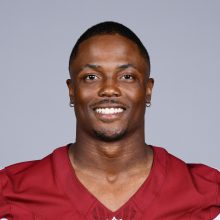 Terry McLaurin78Grade
Terry McLaurin established himself as a walking 1,000-yard receiver over the years. Additionally, he's proven to be a quarterback-proof receiver who can produce despite not having an elite-caliber passer under center. Last season, he played 10 games due to a lingering quad injury. McLaurin is a good No. 1 receiver with a strong route-running skill set to create needed separation. He wins from all receiver alignments in the formation. A healthy season from him and Jayden Daniels could result in a career year for McLaurin.
62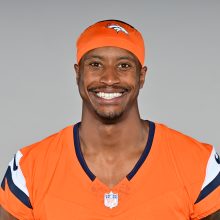 Courtland Sutton78Grade
Cortland Sutton has excelled as the prototypical X and No. 1 wide receiver for the Denver Broncos. He's handled the high volume in their passing offense well, crossing the 1,000-yard mark three times in his career. Finally, he is no longer held back by inadequate quarterback play. He is the safety net for Bo Nix, helping him settle into the NFL in his first two seasons. Sutton is a three-level winner with sneaky speed to get over the top of the defense. He's proven with a good quarterback he is a walking 1,000-yard playmaker who's overcome a torn ACL earlier in his career.
61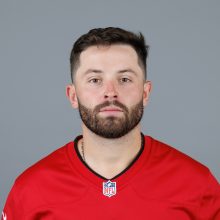 Baker Mayfield78Grade
Baker Mayfield is one of the fiercest competitors in the NFL pound-for-pound. Last season, despite injuries piling up for the Buccaneers, he continued to battle and put them in position to win the division. Mayfield still has that gunslinger mentality, which has Jekyll-and-Hyde results. Four of the team's eight wins were game-winning drives or 4th quarter comebacks last season. Mayfield's arm strength still powers the football to all three levels of the field. He can drive the football with velocity. He's proven to be a good, quality starting quarterback that NFL teams can win with.
60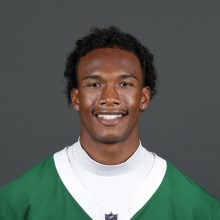 Garrett Wilson78Grade
Garrett Wilson was a consistent 1,000-yard receiver until last season, when he played only seven games. He injured his knee in Week 6 and re-aggravated it in Week 10. Wilson is a talented receiver who plays all over the formation. He is a good route-runner but has been held back by inadequate quarterback play over his career. Wilson separates from man and zone defenses well with good football IQ and tempo. He's a sudden and fluid route-runner who will test cornerbacks' movement skills. He's one of the biggest "what-ifs" in the NFL; hopefully, a good quarterback will walk through the Jets' doors before it's too late.
59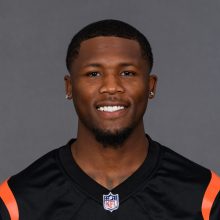 Tee Higgins78Grade
Alongside Ja'Marr Chase, Higgins receives favorable matchups and puts defenses in conflict. Double Chase and leave him one-on-one, or play them honestly. Higgins has vice-grip hands and will pluck the ball out of the air with an aggressive mentality. He attacks and finds those soft spots in zone defenses quickly as a big target. Higgins is open against man coverage, even with a defender nearby; he opens throwing windows with his contested catch ability. He is not the greatest route-runner or natural separator, but he gets the job done, using his frame as a shield between the ball and the cornerback.
58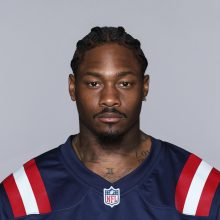 Stefon Diggs79Grade
Stefon Diggs, who signed with Washington late in the offseason, is a floor-raising veteran who has established himself as a WR1 throughout his career. Last season, he was reliable for Drake Maye in New England. While Diggs' air yards per target were the lowest of his career, he was the security blanket and excelled in the quick passing game. Diggs proved his route-running ages like fine wine. His quick separation from man and ability to find open grass quickly against zone defenses helped the Patriots' second-year quarterback. Diggs is a lesser athletic version of himself, but it didn't hinder him from producing and being a consistent playmaker in 2025.
57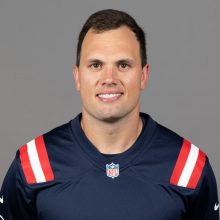 Hunter Henry79Grade
Having a tight end like Hunter Henry helped Drake Maye's MVP candidacy, as he was one of the most impactful red zone threats in the NFL. Five of his seven touchdowns came inside the 20-yard line, along with a target percentage north of 30% on the season. Maye was looking for Henry in "gotta have it" situations all season long, and it proved beneficial. He averaged his best yards after the catch per reception of his career (5.6) last year, was a great post-route space finder, and a versatile receiver for the Patriots offense. Henry knows how to get open, and when you pair that with a quarterback that finds creative ways to get him the football, it's a dangerous combination.
56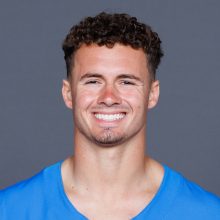 Ladd McConkey79Grade
Ladd McConkey is one of the best young slot receivers in the NFL. He is a reliable chain mover with precise route running to get open quickly. Out of the slot, he is a security blanket and keeps the offense on schedule. McConkey has a high football IQ for reading and attacking defenses post-snap. He is a patient, smart route-runner who excels against zone coverage. He finds grass and settles into the open space. McConkey lacks the functional strength to consistently play through contact at the catch point. Handsy cornerbacks will disrupt him at the line of scrimmage, placing more onus on the offensive playcaller to create easier releases into his routes. Good player with a safe floor.
55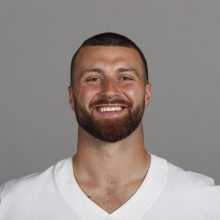 Jake Ferguson79Grade
One of the most dangerous seam weapons in the NFL, Jake Ferguson continues to showcase his value with quarterback Dak Prescott. He has a great feel for the top of routes, whether using physicality or footwork, and gets his head around in a hurry to locate the ball. Ferguson's ball skills make him a fantastic red-zone threat and a trusted player through contact. He's not out there to block much, but he gets the job done and, on the move, provides kick-out blocks for the offense. Ferguson caught more balls and touchdowns than at any point in his career and is poised for another explosive year with the same offense going forward.
54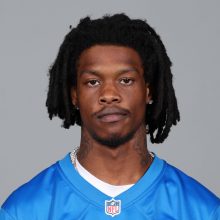 Jameson Williams79Grade
Jameson Williams has emerged as a strong complementary option alongside star receiver Amon-Ra St. Brown. He enters the 2026 NFL season coming off consecutive 1,000-plus-yard seasons. Williams is a dynamic playmaker with great straight-line speed to win vertically. He is a threat to take the top off the defense at any moment. The Lions' speedster is a versatile weapon and an easy target with manufactured touches. Williams has improved his route IQ and is a dangerous yards-after-catch threat in the open field. It didn't matter if he faced man or zone coverages; Williams made plays. He must clean up the drops to maximize his explosive potential.
53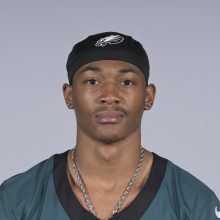 DeVonta Smith79Grade
DeVonta Smith is a talented and smooth-moving wide receiver with great instincts and IQ. He changes directions as a route-runner quickly and suddenly. Smith's routes have little wasted movement at the top to snap off and create space between him and the defender. His IQ against zone coverages is great; he manipulates spot droppers with pacing to find open grass. Smith's slender frame creates issues against physical defenders early in reps. He can be re-routed or slowed down by press coverage. He enters 2026 without AJ Brown as the number one threat for opposing defenses to key in on. It will be interesting to see how Smith handles WR1 duties and defensive attention.
52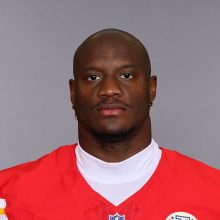 Kenneth Walker III79Grade
Kenneth Walker III is coming off his second 1,000-yard season and was named the Super Bowl MVP. He is a shifty runner with quick and sudden footwork. Walker is a smooth mover with outstanding vision. Walker's lateral agility and explosiveness create pathways to string together jump cuts outside to the perimeter. While he may not run a wide route tree, he is a capable receiving option out of the backfield. Walker's open field speed and acceleration highlight his dynamic playmaking ability. He has battled injuries throughout his career, keeping him from consistently being the full-time bell cow. Walker is a patient and dynamic running back who tips the scales in his offense's favor.
51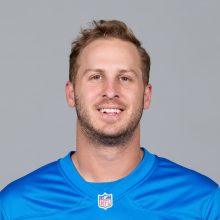 Jared Goff79Grade
Jared Goff has established himself as one of the better in-structure quarterbacks in the league. He excels within clean pockets that allow him to survey the field and find the open receiver. Goff is a timing-and-rhythm passer with a superpower: accuracy. Goff is coming off his fourth consecutive 4,400-plus-yard passing season with six 4,000-yard seasons over his eight-year career. The Lions' starter has struggled in outdoor games and while playing in the elements. Also, pressure highlights his lack of mobility in the pocket. If consistently pressured, his process is rushed, leaving decision-making vulnerable. Goff is a very good starter with a capped ceiling.